On June 9, 2026, the US Food and Drug Administration (FDA) reached a significant milestone in dermatological science and over-the-counter (OTC) drug regulation. FDA added bemotrizinol (BEMT) to OTC Monograph M020 as generally recognized as safe and effective (GRASE) for use as an active ingredient at concentrations up to 6.0%. The final order became effective on August 9, 2026.1 FDA describes bemotrizinol as the first new sunscreen active ingredient added to the US OTC sunscreen monograph since the late 1990s. It is also the first active added through the administrative-order pathway established under the CARES Act of 2020, moving from a proposed order on December 11, 2025, to finalization in just under seven months.
For regulatory affairs managers, R&D directors, and product strategists at US sunscreen brands and contract manufacturing organizations (CMOs), this is more than a news headline. It changes the considerations around formulation strategy, product timelines, global formula harmonization, testing, labeling, sourcing, and portfolio decisions.
US formulators can now work with a photostable, broad-spectrum organic filter that has been used internationally for decades. The opportunity comes with specific US conditions, including a maximum concentration of 6%, monograph requirements, and finished-product testing obligations.
What the FDA Actually Approved: The Final Order in Plain Terms
Bemotrizinol, identified by the INCI name Bis-Ethylhexyloxyphenol Methoxyphenyl Triazine, is an organic, oil-soluble UV filter.
Internationally, it is widely known as Tinosorb S. In the US launch context, it is marketed as PARSOL® Shield. FDA has added it to OTC Monograph M020 as a sunscreen active ingredient with GRASE status under specified conditions.
The final order permits bemotrizinol at a maximum concentration of 6.0% in OTC sunscreen drug products.1 Formulators should note that this limit differs from the European Union’s Annex VI, where bemotrizinol is permitted as a UV filter at concentrations up to 10%.
That difference matters for companies adapting an established international formula for the US market. A European sunscreen containing 8% or 10% bemotrizinol must be recalibrated to 6.0% or less to comply with the US monograph.
FDA considers bemotrizinol GRASE for use in sunscreen products intended for adults and children six months of age and older, consistent with standard monograph active profiles.
The final order took effect on August 9, 2026. From that date, sunscreen drug products containing no more than 6% bemotrizinol could be marketed under the OTC monograph framework without individual NDAs, provided they meet all applicable monograph requirements. This distinction matters: FDA did not individually approve every sunscreen formulation containing bemotrizinol. It established the conditions under which monograph-compliant products containing the active may be marketed.
In its scientific review, FDA considered protection against both UVA and UVB radiation, low dermal absorption, and minimal potential for dermal irritation or sensitization among the relevant safety and efficacy factors.
For product-development teams, this changes the regulatory starting point considerably. The supporting safety data package ultimately closed the gap that had remained since DSM’s original 2005 application.
Regulatory Comparison Matrix for Bemotrizinol
| Parameter | FDA Monograph
M020 (US) |
EU Cosmetics Regulation
(Annex VI) |
TGA (Australia) /
Health Canada |
| Max Permitted
Concentration |
6.0% | 10.0% | 10.0% |
| Regulatory Status | OTC Monograph
Active (GRASE) |
Approved UV Filter | Listed Therapeutic /
Cosmetic Active |
| Age Restraint | 6 months and older | No age restriction | 6 months and older |
| Required Label
Name |
Bemotrizinol 6% | Bis-Ethylhexyloxyphenol
Methoxyphenyl Triazine |
Bemotrizinol |
Why It Took 20 Years — and Then 7 Months
Bemotrizinol’s US regulatory history shows just how much the OTC monograph system has changed.
The ingredient itself was not new to global sunscreen development. It has been commercially available internationally for decades and is permitted in the EU at concentrations up to 10%.
The US pathway, however, was historically much slower. The original US effort dates to an application submitted by DSM in 2005 through the Time and Extent Application (TEA) pathway.
The regulatory environment changed with the Coronavirus Aid, Relief, and Economic Security (CARES) Act of 2020, which reformed the OTC monograph system. Rather than relying on the older and slower notice-and-comment rulemaking structure, the modern framework allows FDA to amend OTC monographs through an administrative-order system known as the OTC Monograph Order Request (OMOR) process.
DSM Nutritional Products submitted the OMOR for bemotrizinol in fall 2024, supported by additional safety data for concentrations up to 6%. FDA issued the proposed administrative order on December 11, 2025, accepted public comments through January 26, 2026, and finalized the order on June 9, 2026—approximately seven months after the proposed order. 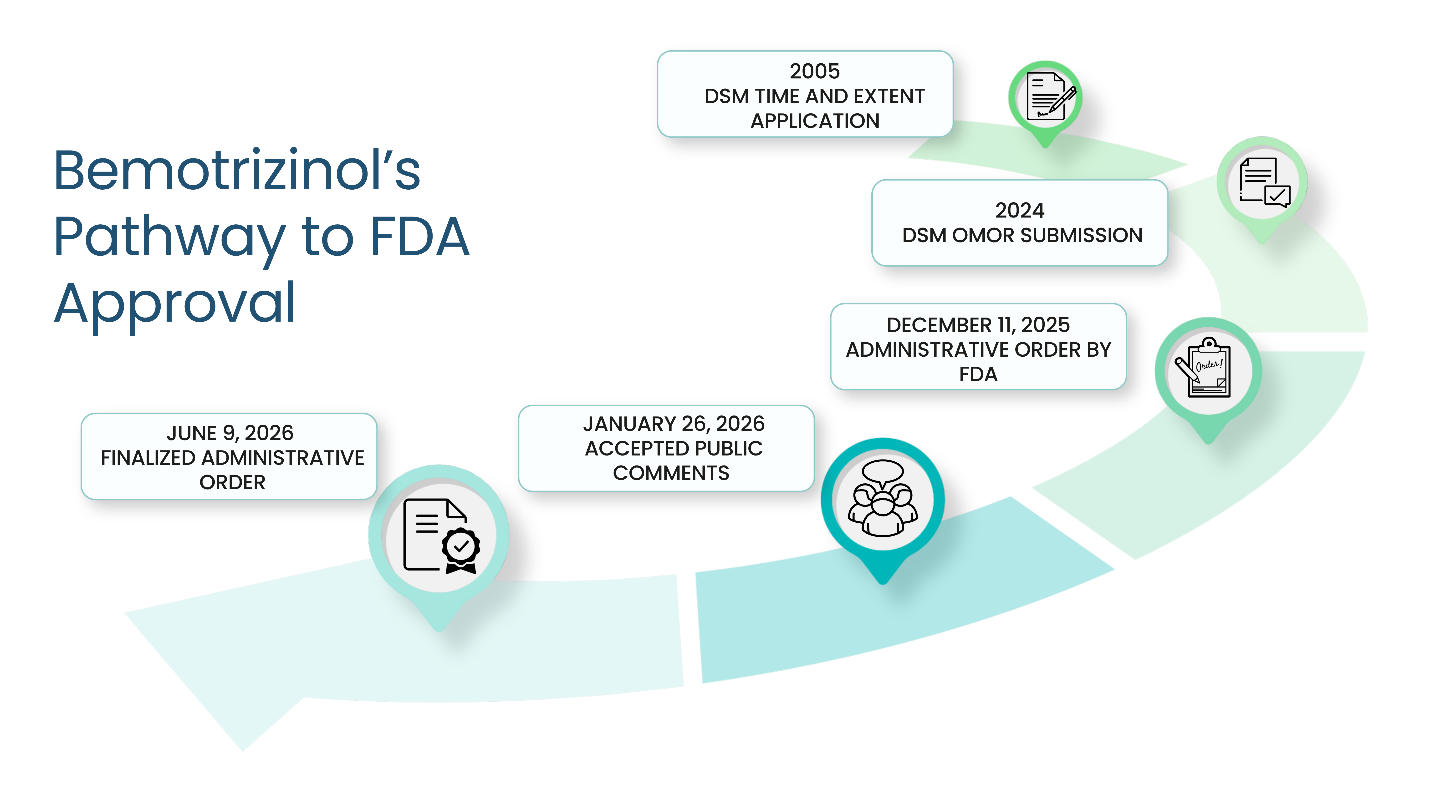
For the industry, that timeline is arguably as important as the ingredient itself.
The BEMT decision shows that the reformed OTC monograph process can move a new sunscreen active from formal proposal to final order on a substantially shorter timeline. It therefore provides a working blueprint for companies seeking approval of other internationally established broad-spectrum UV filters, including bisoctrizole/Tinosorb M, ecamsule, and others that remain outside the US monograph.
The competitive implication is clear. The US sunscreen-filter landscape is no longer necessarily frozen in its historical configuration. Brands that make regulatory intelligence part of their product-development strategy may be better positioned to recognize opportunities before a newly permitted ingredient becomes mainstream.
The UVA Gap: Why BEMT Matters Technically
Before 2026, the US sunscreen-filter palette was particularly limited in the UVA spectrum, especially across the long-wave UVA-I range of 340–400 nm. US formulators relied on avobenzone (Butyl Methoxydibenzoylmethane) as the only approved organic filter covering UVA-I.
Avobenzone has a high extinction coefficient at 357 nm, but it is intrinsically photounstable. After absorbing UV photons, it undergoes enol-to-keto tautomerization and can lose 50% to 70% of its filtering capacity within an hour of sun exposure unless it is stabilized with secondary filters such as octocrylene or with more complex photostabilizing systems.
As an alternative, formulators have used mineral filters, particularly zinc oxide (ZnO), which provides broad-spectrum physical attenuation. Achieving very high UVA protection factors (UVA-PF) with zinc oxide alone, however, can require inclusion rates of 15–25%. At those levels, formulas may become heavier and may leave a visible white cast, particularly on darker skin tones (Fitzpatrick Types IV–VI).
Bemotrizinol fundamentally changes this formulation landscape. Its absorption profile extends across the UVB and UVA regions, with published literature reporting peaks around 310 and 340–343 nm. Its molecular structure and photochemical behavior also contribute to high photostability, allowing it to maintain UV-absorbing performance under irradiation.
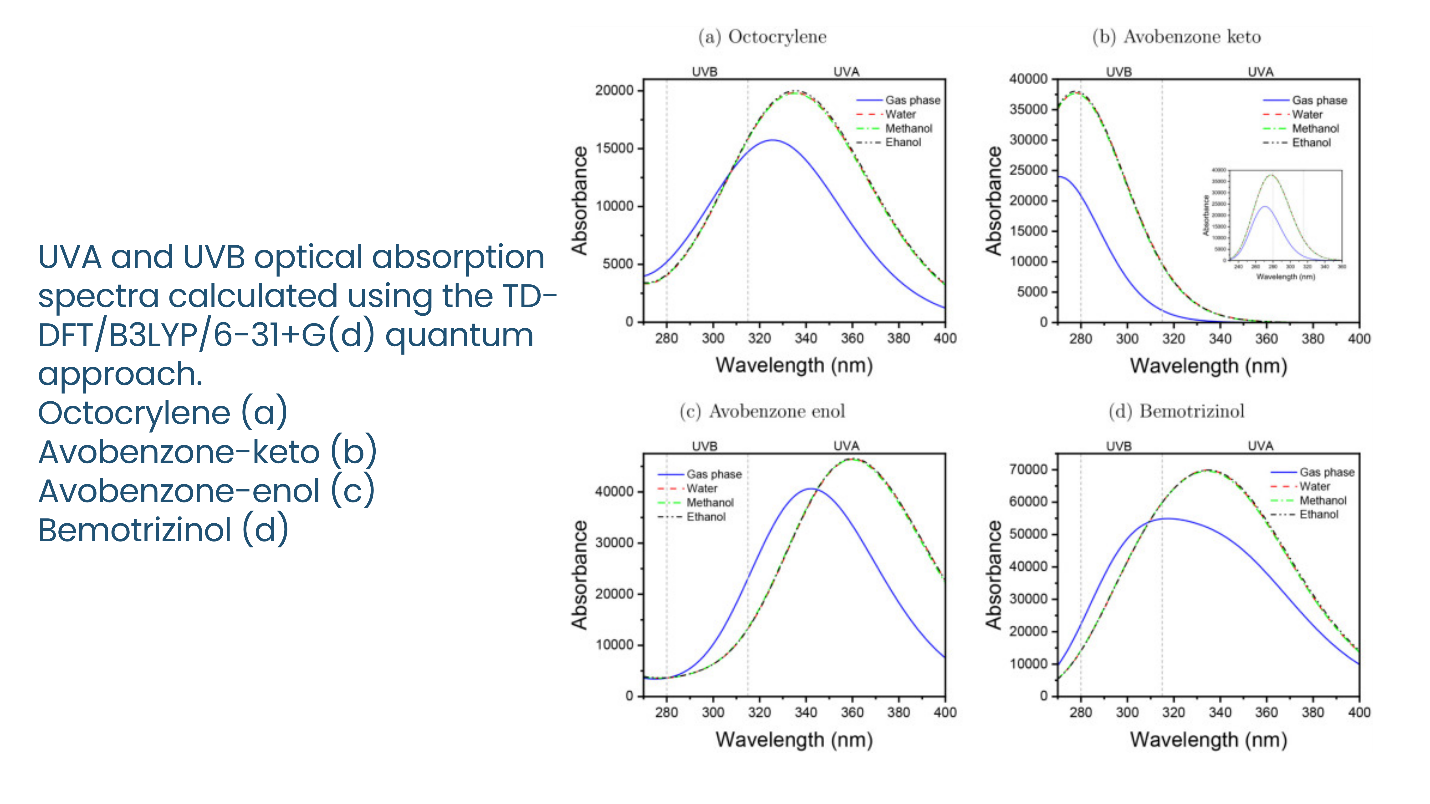 As a result, US formulators can now develop high UVA-PF sunscreen formulations without relying on an avobenzone/octocrylene stabilization architecture. This is particularly relevant because octocrylene remains classified as a Category III active undergoing safety review.
Bemotrizinol also offers strong spectral complementarity when paired with zinc oxide in mineral-based formulations because it efficiently covers the critical 310–350 nm range. Pairing bemotrizinol at 3–6% with micronized or non-nano ZnO at 5–12% allows formulators to pursue SPF 50+ and critical-wavelength performance across 340–400 nm with significantly lower total zinc oxide loads. This can reduce white cast and substantially improve skin feel across Fitzpatrick skin types.
Labeling and Compliance Under the Monograph
Commercializing a bemotrizinol-containing OTC sunscreen in the US requires strict adherence to Drug Facts labeling and monograph compliance requirements. Formulation and regulatory teams should incorporate the following standards:
Drug Facts active ingredients section: Under 21 CFR 201.66, bemotrizinol must be declared in the Drug Facts table under the heading “Active ingredients,” using its designated USP/FDA name.
SPF and Broad-Spectrum Claims: Products containing bemotrizinol must follow standard FDA testing protocols:
- In Vivo SPF Testing: Static and water-resistant (40- or 80-minute) SPF values must be established using the 10-subject in vivo clinical protocol outlined in 21 CFR 201.327.11
- Broad Spectrum Critical Wavelength: To make a “Broad Spectrum” claim, finished products must undergo in vitro substrate spectrophotometry measuring UV transmittance or absorbance from 290 to 400 nm. A critical wavelength of at least 370 nm is required.
Under OTC Monograph M020, BEMT may be combined with other GRASE monograph active ingredients, including zinc oxide, titanium dioxide, avobenzone, homosalate, octisalate, and Category III actives under existing marketing conditions, provided each active remains within its individual concentration limit.
From an environmental regulatory perspective, BEMT is a large, highly lipophilic molecule with low bioavailability. It is not implicated in state or municipal eco-bans such as the restrictions on oxybenzone and octinoxate enacted in Hawaii, Key West, or the US Virgin Islands.12,13 A formula combining BEMT with zinc oxide offers a compliant, broad-spectrum option for nationwide distribution.
It is important to note that BEMT was approved through a standalone administrative order. The decision does not resolve the broader 2021 proposed rule concerning the 12 Category III filters, including avobenzone, homosalate, octisalate, and octocrylene. Those ingredients remain under safety evaluation. Formulators can therefore view BEMT as a next-generation anchor UV filter that may help reduce dependence on legacy organic filters.
Decision Framework: What Brands Should Do Now
The regulatory change creates a real opportunity, but brands now need to move from analysis to execution.
Begin by auditing existing product lines to identify SKUs that could benefit from BEMT, including:
- High-SPF products with limited UVA performance
- Formulas constrained by the aesthetics of high zinc oxide loading
- Lightweight daily sunscreens where sensory elegance is critical
- Products requiring strong broad-spectrum performance
- Tinted or facial products where opacity, white cast, and filter load must be carefully balanced
- US products currently maintained as separate formulas from international versions because of the historical US filter gap
US brands that currently operate dual supply chains—one formula for the US and another for international markets—can now assess the potential for formula convergence. A standardized architecture using no more than 6% BEMT, together with zinc oxide or modern emollients, can satisfy concentration frameworks across the US (≤6%), European Union (≤10%), Australia (≤10%), and Canada. Harmonizing global SKUs can:
- Reduce raw-material complexity
- Simplify manufacturing
- Lower inventory overhead
The regulatory pathway is open, but a commercial launch in 2027 still requires development time. R&D teams can begin by screening different BEMT concentrations and combinations, followed by the appropriate analytical, stability, SPF, broad-spectrum, and water-resistance testing.
A practical development program should evaluate:
- BEMT concentration and solubilization
- Compatibility with other UV filters
- UV spectral performance
- SPF performance
- Critical wavelength/broad-spectrum performance
- Photostability
- Physical and chemical stability
- Packaging compatibility
- Sensory properties
- Microbiological quality where relevant
- Manufacturing process robustness
Supply planning should run alongside formulation development. Securing BEMT supply is critical as global demand accelerates, so brands should establish agreements with qualified vendors early to protect material availability. Working with experienced technology providers can also offer direct access to pre-validated formulation architectures.
As a pioneer in advanced UV attenuation systems, VIZOR developed and validated hybrid ZnO + BEMT formulation architectures in international therapeutic markets before US approval. VIZOR’s technical team provides complete formulation blueprints, solubilization guidance, and empirical SPF ladder data, enabling US brands to reduce preliminary trial-and-error work and accelerate BEMT-powered sunscreen development.
The strategic advantage will belong to companies that start early enough to complete the full technical and regulatory cycle while consumer and retailer interest in the new filter remains high.
_______________________________________________________________________________________________________
Frequently Asked Questions
Q: Is bemotrizinol FDA approved?
Yes. On June 9, 2026, FDA finalized an administrative order adding bemotrizinol to OTC Monograph M020 as a permitted sunscreen active ingredient. FDA considers it GRASE under the conditions specified in the order, which became effective on August 9, 2026.
Q: When will bemotrizinol sunscreens be available in the US?
The final order became effective on August 9, 2026, allowing compliant products to be marketed under the OTC monograph framework. Individual commercial products must still complete formulation, testing, manufacturing, labeling, and all other applicable requirements.
Q: What is the maximum concentration of bemotrizinol allowed in US sunscreens?
The maximum permitted concentration under US OTC Monograph M020 is 6.0% (w/w). This is lower than the 10.0% limit permitted in the European Union and Australia.
Q: Can bemotrizinol be combined with zinc oxide in a US sunscreen?
Yes. Bemotrizinol can be combined with zinc oxide and other monograph-compliant active filters. Combining BEMT with zinc oxide provides strong spectral synergy, supporting high broad-spectrum protection with improved aesthetics.
Q: Does the bemotrizinol approval change the status of avobenzone or oxybenzone?
No. The BEMT approval was issued through an independent administrative order. It does not change the regulatory status of avobenzone, oxybenzone, or other legacy filters under evaluation in the 2021 proposed rule.